Shipper's Guide
ISPM-15 Explained: What Shippers Need to Know About Wood Packaging
How to read the IPPC stamp, which treatments are accepted, what's exempt, and what happens when a pallet or crate fails inspection.
The short answer
ISPM-15 is the international rule that requires solid-wood packaging — pallets, crates, skids, and dunnage — to be heat treated or fumigated and stamped with the IPPC mark before it crosses a border. It exists to stop wood-boring insects and plant diseases from hitching a ride in shipping material. If your freight is leaving the U.S. on wood packaging, assume ISPM-15 applies.
What ISPM-15 Is and What It Covers
ISPM-15 stands for International Standards for Phytosanitary Measures No. 15, titled Regulation of Wood Packaging Material in International Trade. It was first adopted in 2002 and is maintained by the International Plant Protection Convention (IPPC), a treaty administered through the UN Food and Agriculture Organization.
Raw wood can carry pests such as the Asian longhorned beetle, emerald ash borer, and pine wood nematode. Wood packaging moves between continents constantly, so it became one of the main pathways for invasive species. ISPM-15 closes that pathway by requiring the wood to be treated to kill anything living in it, then marked so inspectors can verify the treatment at a glance.
The standard applies to wood packaging material more than 6 mm thick, including:
- Pallets and skids, both stringer and block construction
- Crates, boxes, and cases built from solid wood
- Dunnage, blocking, and bracing used to secure cargo in containers, holds, and flatracks
- Cable reels, load boards, and collars made of raw wood
The wood must also be debarked. Small, isolated pieces of bark are tolerated within tight size limits, but bark-covered lumber is not compliant even if it has been heat treated.
IPPC vs. ISPM-15: What's the Difference?
The two terms get used interchangeably, but they're different things. The IPPC is the organization, an international plant-health treaty with more than 180 member countries. ISPM-15 is one of the standards it publishes, the one that covers wood packaging.
The stamp on compliant packaging is usually called the "IPPC mark" or "IPPC stamp" because it carries the IPPC symbol. What it certifies is compliance with ISPM-15. When a customer asks for "IPPC pallets," "ISPM-15 pallets," or "heat treated export pallets," they're asking for the same thing.
How to Read an ISPM-15 Stamp
A compliant mark is burned or stamped onto at least two opposite sides of the pallet or crate so it can be seen without unloading. The layout varies slightly by country and inspection agency, but every mark has the same core parts:
symbol
Simplified illustration. Real marks also show the inspection agency's logo.
1. The IPPC symbol
A stylized wheat-sheaf logo, usually on the left. It's the international signal that the item is treated wood packaging. It can only be applied by a producer authorized to use it.
2. Country code + producer number
The two-letter ISO country code (US for the United States) followed by the unique number assigned to the facility that treated or produced the packaging. That number is how an inspector traces a pallet back to the company responsible for it.
3. Agency logo (U.S. marks)
U.S. marks also carry the logo of the accredited inspection agency that audits the producer. More on how that system works below.
4. Treatment code
Two letters showing how the wood was treated: HT, DH, or MB. You may still see DB (debarked) on older marks. Debarking is now required for all compliant wood, so it no longer needs its own code.
Treatment Codes: HT, DH, and MB
ISPM-15 recognizes three treatment methods. For U.S. exporters, heat treatment is the practical default.
| Code | Method | Requirement | What to know |
|---|---|---|---|
| HT | Heat treatment | Wood core reaches at least 56 °C (132.8 °F) for 30 continuous minutes | By far the most common. Accepted everywhere, and no chemical residue. |
| DH | Dielectric heating | Wood reaches at least 60 °C (140 °F) throughout its profile for 1 continuous minute | Microwave or radio-frequency heating. Less common. |
| MB | Methyl bromide fumigation | Fumigation to a set concentration and duration | Being phased out because methyl bromide depletes ozone. Some countries no longer accept it, so avoid MB-marked packaging for export. |
A common misconception: "kiln-dried" (KD) is not the same as heat treated. Kiln drying lowers moisture content and may or may not meet the ISPM-15 time-and-temperature schedule. Only wood carrying the HT mark from an authorized producer counts as compliant.
What's Exempt from ISPM-15
These materials don't need to be treated or stamped:
- Thin wood, 6 mm or less
- Processed wood made with glue, heat, and pressure, such as plywood, OSB, particleboard, and veneer
- Sawdust, shavings, and wood wool
- Wine and spirit barrels heated during manufacture
- Wood permanently built into vehicles and shipping containers
- Non-wood pallets, whether plastic, metal, or corrugated
Watch out for hybrid packaging. A plywood crate is exempt, but if it sits on solid-wood skids or has solid-wood cleats, those parts still need to be treated and marked. This is one of the most common reasons export crates get flagged.
Which Countries Require ISPM-15?
Nearly every major trading partner enforces ISPM-15 on imported wood packaging, including the European Union and United Kingdom, China, Mexico, Australia, New Zealand, Japan, South Korea, India, and Brazil. The United States enforces it on imports too. U.S. Customs and Border Protection turns back non-compliant wood packaging at the border.
A few trade lanes have special arrangements, and individual countries sometimes add their own requirements on top of the standard. Those rules change, so check the destination's current requirements with your freight forwarder before you ship.
The practical rule for exporters: if wood packaging is leaving the country, use ISPM-15 stock. Compliant pallets and crates cost little more than untreated ones, and they remove a whole category of risk at the destination port.
What Happens If Wood Packaging Isn't Compliant
If inspectors at the destination find wood packaging with no mark, an illegible mark, bark, or live pests, the shipment can be:
Held
Detained at the port while the problem is resolved, with demurrage and storage charges adding up.
Treated or destroyed
The packaging is fumigated, or removed and destroyed, and the cargo re-packed, all at the shipper's expense.
Re-exported
The entire shipment is sent back to origin, and the importer never receives it.
The costs are usually charged to the shipper or importer and can easily exceed the value of the packaging many times over. That's why freight forwarders often refuse to load export freight on unmarked wood.
How ISPM-15 Certification Works in the U.S.
In the United States, the USDA's Animal and Plant Health Inspection Service (APHIS) oversees ISPM-15. Day to day, the program is run through the American Lumber Standard Committee (ALSC). The ALSC accredits independent inspection agencies, and those agencies license and audit the facilities allowed to apply the IPPC mark.
There are two ways a U.S. company can produce compliant packaging:
Treat the wood on-site
The facility runs its own heat-treatment chamber, treats lumber or finished pallets to the ISPM-15 schedule, and marks them.
Build with certified heat-treated lumber
The manufacturer buys lumber that has already been heat treated at a certified facility, builds the pallets or crates from it, and applies the IPPC mark under its own registered number. The inspection agency audits its lumber sourcing and records to confirm only treated wood goes into marked product.
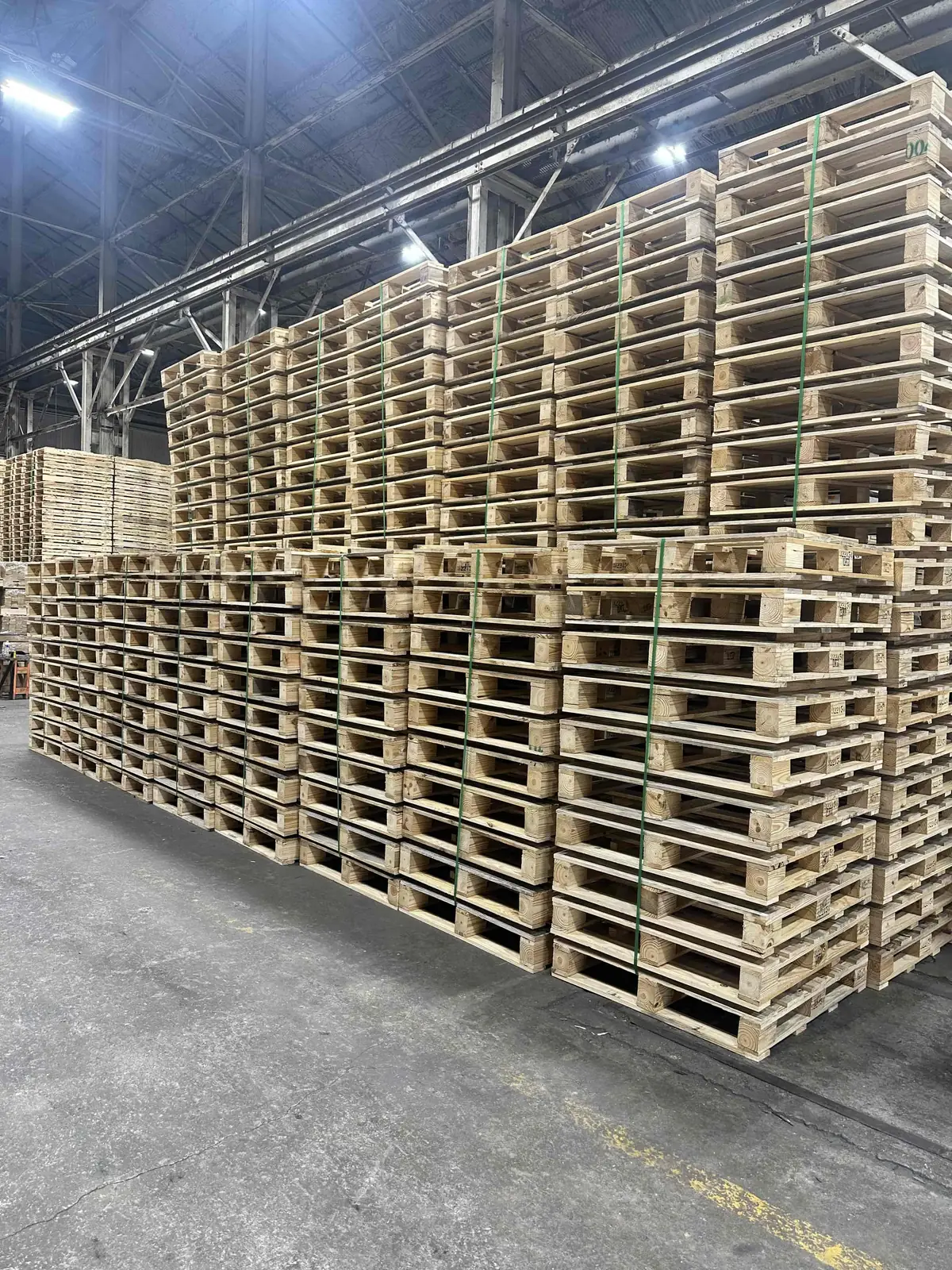
Victor Wood Products uses the second approach. We build pallets, skids, crates, and dunnage in Baltimore from certified heat-treated lumber and stamp each unit with the IPPC mark. You get compliant packaging built to your specs, made minutes from the Port of Baltimore.
ISPM-15 — Frequently Asked Questions
What does ISPM stand for?
ISPM stands for International Standards for Phytosanitary Measures. ISPM No. 15 is the standard that covers wood packaging material — pallets, crates, skids, and dunnage — used in international trade.
Is ISPM-15 required for domestic shipments?
No. ISPM-15 applies to wood packaging that crosses an international border. Pallets and crates that stay within the United States don't need to be treated or stamped, although some shippers use ISPM-15 stock anyway so the same packaging can be used for export.
Do plastic pallets, plywood, or OSB crates need ISPM-15?
No. ISPM-15 covers raw solid wood. Plastic and metal pallets are outside its scope, and processed wood products such as plywood, OSB, and particleboard made with glue, heat, and pressure are exempt. Solid-wood parts attached to them — runners, cleats, or skids — still need to be treated and marked.
Does an ISPM-15 stamp expire?
The standard sets no expiration date — heat treatment is a one-time treatment and the mark stays valid as long as the packaging isn't altered. Repaired pallets can only use wood that has already been treated, and remanufactured units must be re-treated and re-marked.
What's the difference between IPPC and ISPM-15?
The IPPC (International Plant Protection Convention) is the international treaty organization. ISPM-15 is one of the standards it publishes. The stamp on compliant wood packaging is usually called the IPPC mark because it carries the IPPC symbol, but it certifies compliance with ISPM-15.
Can a pallet manufacturer be ISPM-15 compliant without a heat-treating kiln?
Yes. In the U.S., a manufacturer can build pallets and crates from lumber that has already been heat treated at a certified facility and apply the IPPC mark under its own registered number, audited by an accredited inspection agency. That is a common and fully compliant way to produce ISPM-15 packaging.
Shipping Out of Baltimore? Get Compliant Packaging Fast.
ISPM-15 pallets, crates, and dunnage built to your specs, minutes from the Port of Baltimore. Send us your sizes and ship date for a same-day quote.